
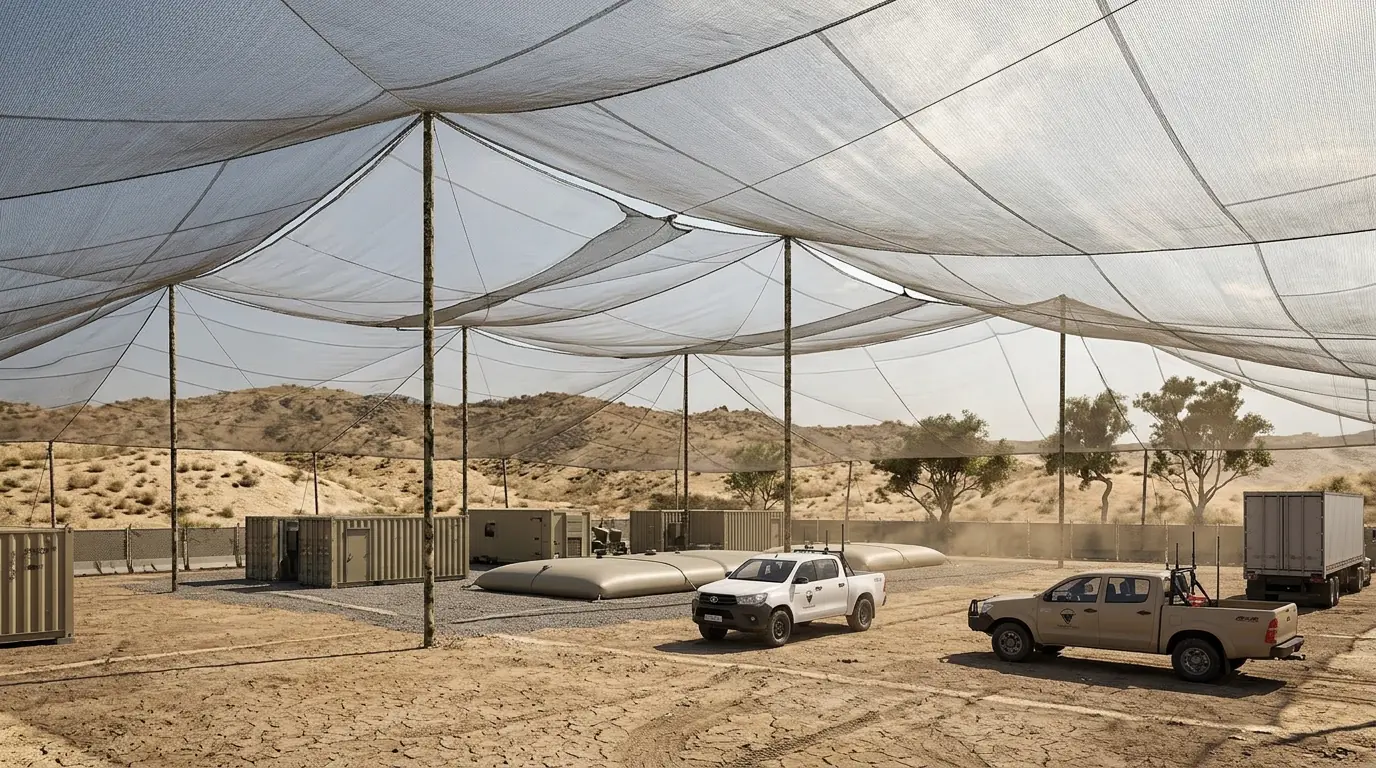
Access roads and supply routes are long, exposed and hard to protect with point defences. Over the past few years, overhead and side net corridors have become one of the most practical ways to reduce the risk of small drones reaching vehicles on a road. This article explains how a net corridor works and what to consider when planning one for the access roads of a critical site.
What is a net corridor?
A net corridor is a line of posts or frames along a road, carrying an overhead net and, where needed, side nets. A drone approaching the road is caught or stopped by the net before it reaches the vehicles below. Because the net is passive, it works day and night and does not depend on detecting or jamming the drone.
Why physical nets complement electronic protection
Electronic countermeasures are effective against many drones, but not all. Drones guided by fiber-optic cable or flying autonomously do not rely on a radio link, so jamming has no effect. A physical net does not care how a drone is guided, which is why it is increasingly used together with detection and electronic systems.
Planning a corridor
Layout
Corridors usually cover the most exposed sections first: approaches to the site, bends, junctions and places where vehicles slow down. The overhead net must clear the tallest vehicle with margin for net deflection.
Supports
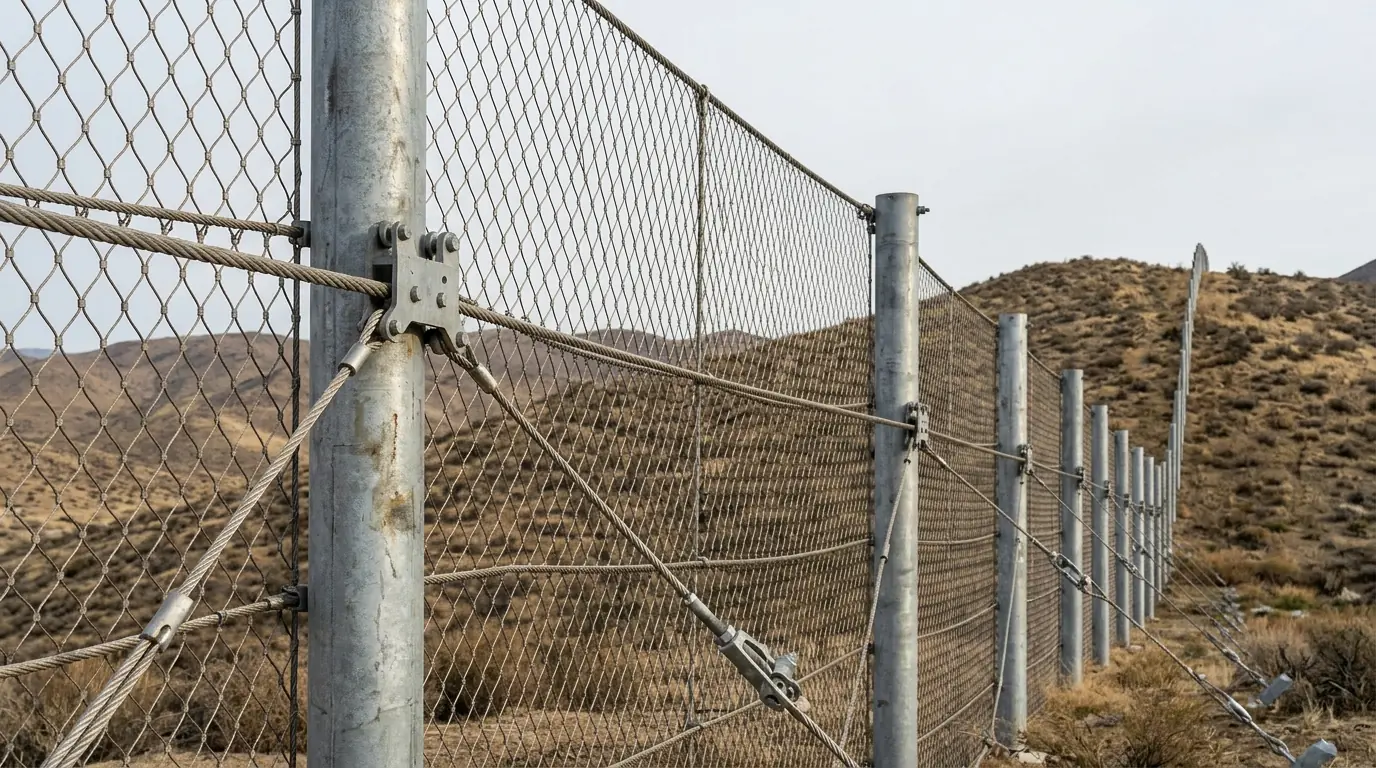
Posts are placed along both sides of the road and connected by cables that carry the net. Existing structures, such as lighting columns or tree lines, can sometimes be used, but they should be checked for the additional load.
Net selection
The mesh must be smaller than the smallest drone you need to stop. Finer meshes stop smaller drones but catch more wind, ice and snow, so the final choice is a balance. Knotless and knotted synthetic nets are the usual choice for corridors because they are light and quick to install over long distances.
Wind, snow and ice
Long net runs collect significant wind load, and fine meshes can hold snow and ice in winter. Cable sizes, post spacing and anchors must be designed for these loads by a local structural engineer.
Maintenance and repair
Nets are supplied in panels joined with lacing rope, so a damaged section can be cut out and replaced quickly. Keep spare panels, lacing rope and fittings near the route, and inspect the corridor regularly and after storms.
Limits to keep in mind
Talk to us
MAISHI supplies knotless and knotted nets, cable sets and fittings for linear protection, with layout drawings and installation guidance for your local contractor. Send us your route length and requirements for a budgetary quotation, or read our guide to protecting buildings from drones.
Leave a Reply